CRM and Internal Systems Development in Moldova
8
Completed works
View portfolioInternal business systems tailored to your company’s specific needs are one of the key solutions offered by iLab. We develop modern, user-friendly information systems designed to optimise workflows and improve operational efficiency.
For today’s businesses an internal management system is essential for smooth and productive collaboration. Audit processes, inventory and sales management, planning, customer databases, employee performance tracking, analytics, and many other operations can be centralised into one reliable and efficient platform.
When developing internal systems, we carefully analyse every aspect of the company’s workflow and business processes. That is why the team at iLab takes an individual approach to every project, creating solutions fully adapted to each client’s requirements and goals.
best solutions

User access rights separation

Process automatization

Fetching data from external documents

Setting up all necessary notifications
Over 100 possible integrations
Project development is not only writing code, but also integrating third-party services and programs.
 1C
1C
 iiko
iiko
 MAIB
MAIB
 UNA.MD
 Mastercard
 Visa
Visa
 Paynet
 Netopia Payments
 PayU
PayU
 Stripe
 SmartBill
 Fan Courier
 Nova Poshta
 Sameday
 Apple Developer Program
 Google Play Console
 TestFlight
20+
Technologies used
Website development involves more than just writing code; it also involves integrating third-party services and programs.
 PHP
PHP
 CodeIgniter
 MySQL
MySQL
 Jira
Jira
 Git
Git
 HTML5
HTML5
 CSS3
CSS3
 Javascript
 jQuery
 Bootstrap
 Laravel
 Google Firebase
 React Native
 iOS
iOS
 Android
Our services
Websites, services, mobile applications, personal accounts, loyalty programs and navigation systems.
All services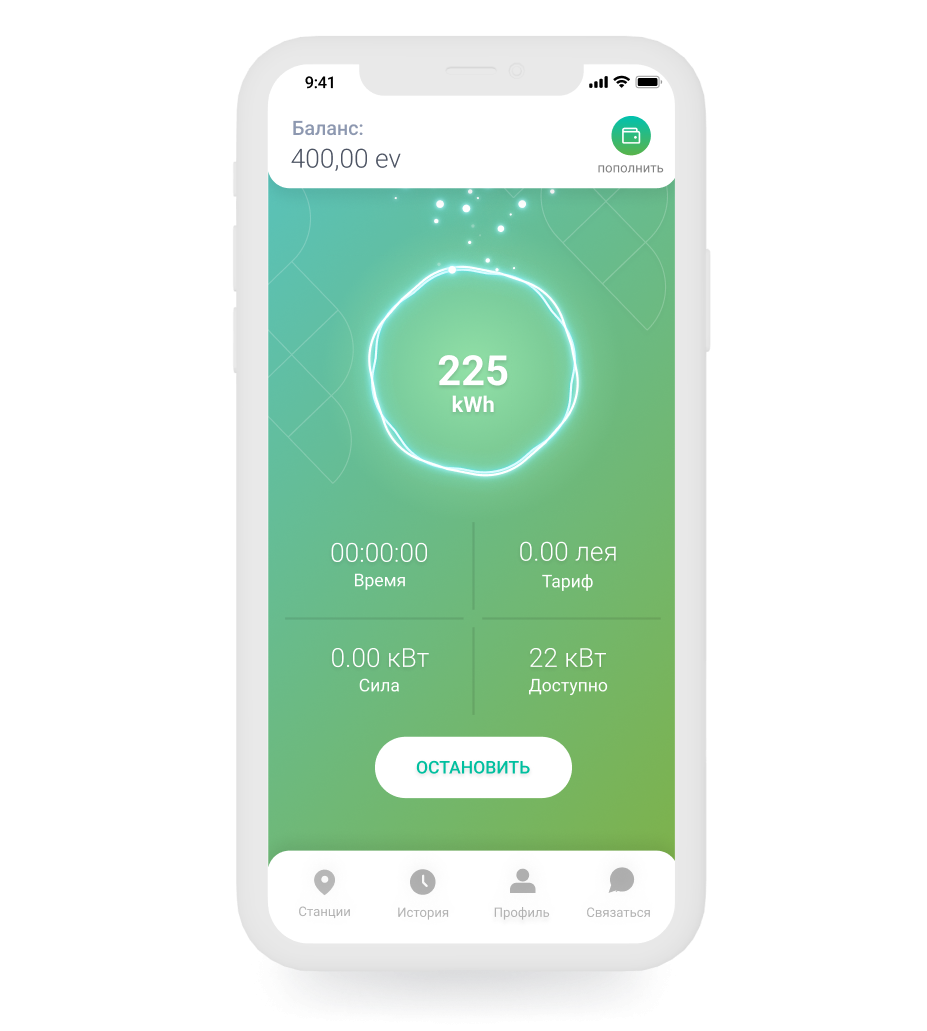
Find out the preliminary cost of your project
Answer 5 questions — and receive the estimate by e-mail
Find out the cost
in the end you will get

A system that meets your requirements

2 year warranty on works performed

Set of required of reports
Reviews
All reviews
The ILab team delivered the app exactly to our requirements, maintained clear communication throughout the project, and responded promptly to change requests. The application runs stably and efficiently. We recommend I Lab as a reliable partner for mobile app development.

iLab has been a trusted IT partner of Eliva Press for more than 9 years. The company provides high-quality technical support, online project development, and effective solutions for complex challenges, consistently demonstrating professionalism, reliability, and a strong understanding of business needs.

I am pleased to provide this letter of recommendation for Victor and the team at iLab following the successful development of our company website for Agora Advisory.

While our Company was growing, we addressed to Ilab twice, asking to calculate web site cost for our Company. We decided to save money and refused at first, since we thought that we would achieve similar results all by ourselves. However, as a matter of fact, it turned out to be more difficult than we could even imagine. The project exceeded the allotted time, was regularly changed and, finally, was tossed as a garbage.

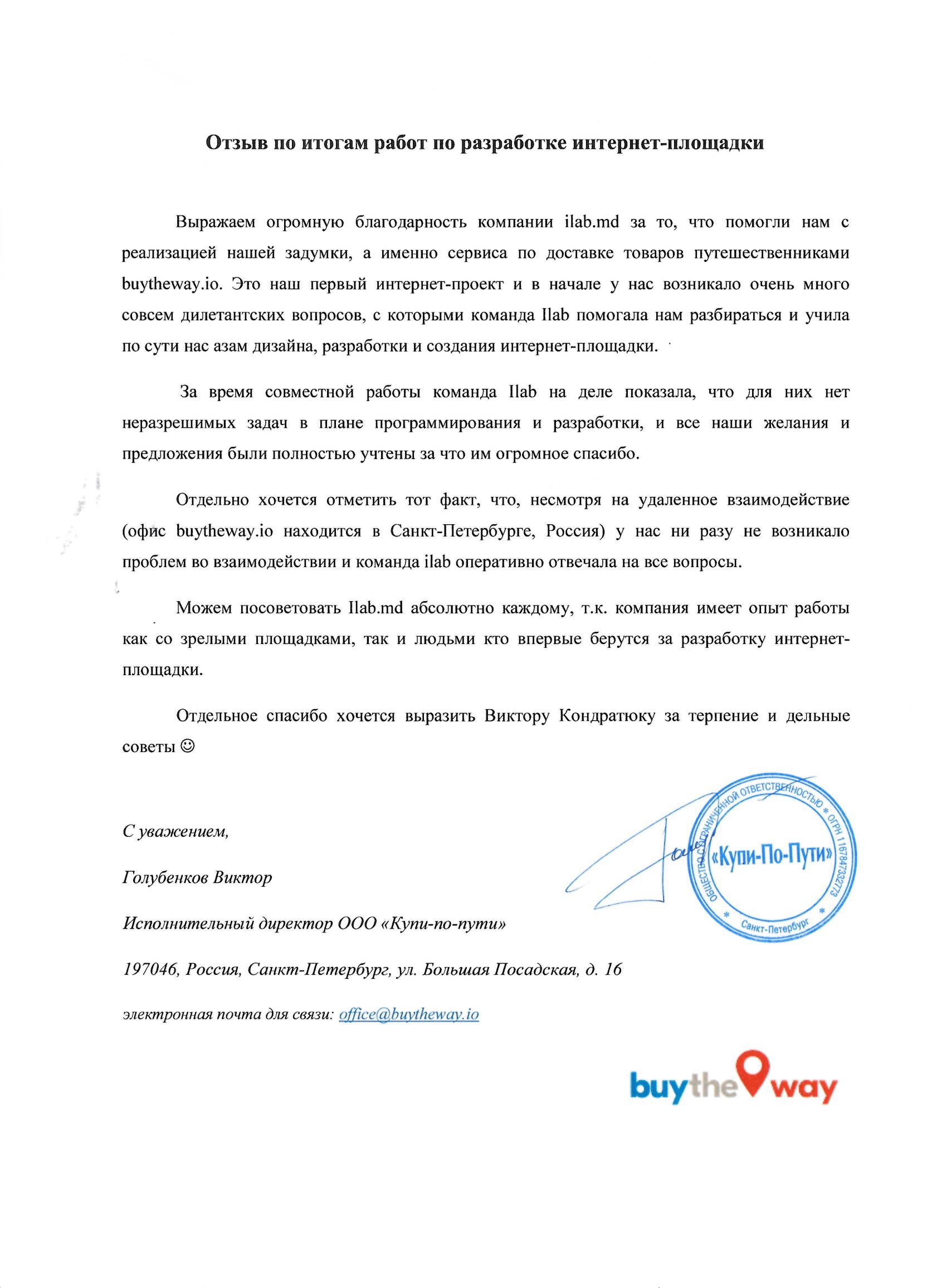
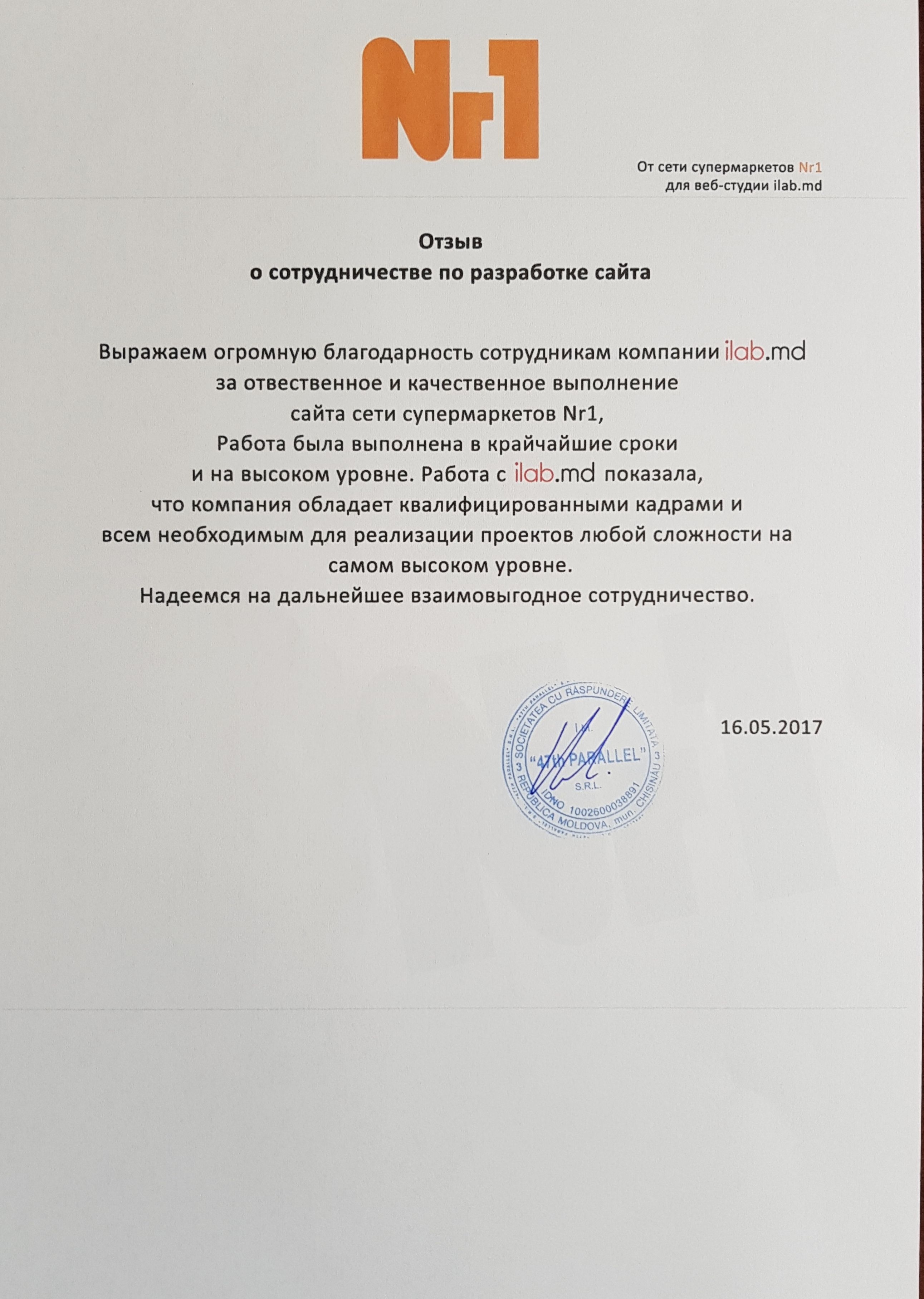
We would like to express our deep gratitude towards the employees of the company ilab.md for their responsible and high-quality development of the website for the chain of the supermarkets Nr1.

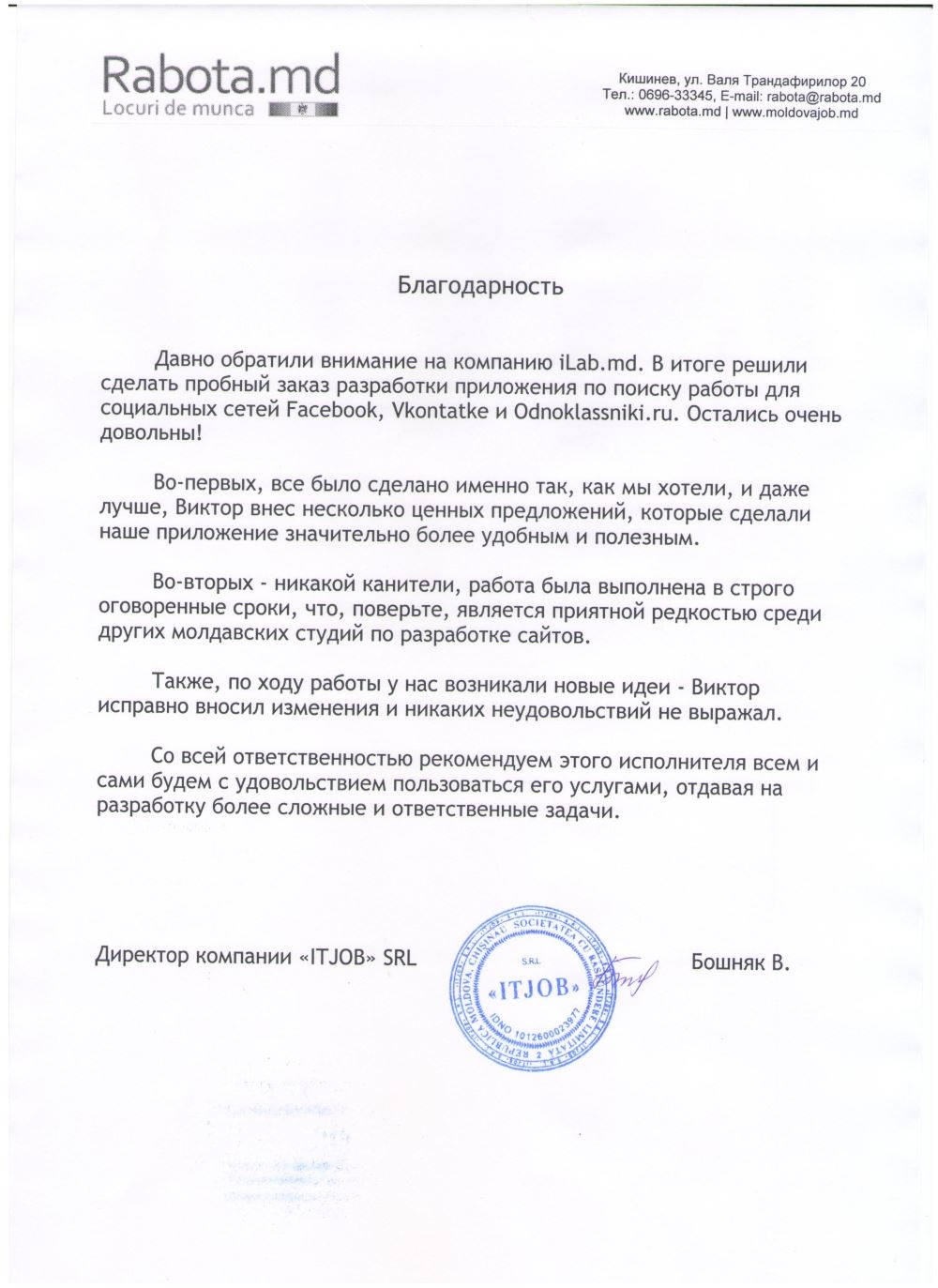
We have paid attention to iLab.md company long time ago. As a result decided to make a trial order for development of social network application for job searching. The application was intended for Facebook, Vkontakte, Odnoklassniki. We were pleased with the collaboration.


Faq
A CRM system is a software solution for managing customers, sales, and related processes. An internal business system can cover a broader range of tasks, including order, product and inventory management, document workflows, employee tasks, reporting, and other internal company processes. At iLab, we develop such systems individually, adapting them to the specific business processes of each company.
CRM and internal business systems can automate customer and order management, database management, product and inventory control, employee task assignment, document and report generation, notifications, and other recurring operations. The set of features depends on the company's needs: the system can automate a single process or combine several areas of the business within one platform.
Off-the-shelf CRM systems provide a standard set of features and often require companies to adapt their business processes to the system's capabilities. A custom CRM is developed around the company's existing processes, including the required data structure, employee roles, workflows, reports, and integrations. This approach is particularly suitable for companies with specific processes that are difficult or impossible to implement within a standard CRM solution.
Custom CRM development makes sense when standard solutions do not fully meet the company's requirements or require too many workarounds. For example, employees may need to work simultaneously across several applications and spreadsheets, many operations may be performed manually, or the business may require custom order-processing logic, complex access permissions, or specific reporting. In such cases, a custom system can bring processes and data together in a single workspace.
Yes. A CRM or internal business system can be integrated with a website, online store, accounting system, payment services, delivery services, email, and other external systems. The availability and method of integration depend on whether the particular service provides an API or other data exchange mechanisms. Integrations enable automatic data transfer between systems and reduce the number of manual operations.
Yes, provided that the data can be exported or obtained through another technically available method. Customer databases, products, orders, reference data, and other required information can be transferred to the new system. Before migration, we analyze the structure of the existing data and determine which information needs to be transferred, transformed, or consolidated.
Yes. Different user roles can be created within the system, with specific sections, data, and actions available to each role. For example, managers may only work with their own customers and orders, department heads may have access to data and reports for the entire department, while administrators can manage the system and its users. The role and access permission structure is designed around the company's internal processes.
The level of protection depends on the project's requirements and the nature of the data being stored. Security measures may include access control, secure authentication, encryption of data in transit, backups, and other security mechanisms. When designing the system, we also determine which employees should have access to specific information and which data requires additional protection.
The development timeline depends on the number of modules, the complexity of the business logic, the number of user roles, the scope of integrations, and whether data needs to be migrated from existing systems. A simple internal system can be developed considerably faster than a complex CRM that combines sales, inventory, documents, reporting, and multiple external services. After discussing the requirements, we estimate the scope of work and determine the development timeline for the specific project.
The cost of a custom CRM is calculated individually for each project and depends on its functionality, the complexity of the business processes, the number of user roles, integrations, reports, and other requirements. Before development begins, we analyze the company's needs, define the required functionality, and use this information to estimate the project cost. This approach avoids unnecessary features and ensures that we develop only the tools the business actually needs.
In terms of direct costs, Bitrix24 is almost always cheaper. Its Standard plan covers up to 50 users and costs €99 per month when billed annually. A custom CRM becomes more cost-effective when off-the-shelf software can't fully support your business processes, forcing employees to duplicate work in Excel and messaging apps.
There's no fixed price. Development costs depend on the number of user roles, modules, and integrations required, and are calculated after reviewing your business processes. It's a one-time development investment, plus €50–€250 per year for hosting, with no monthly per-user fees.
Yes. Inquiries from contact forms, chat, and phone calls can automatically flow into your CRM. Our CRM integrations start at €200.
Yes. Both platforms provide APIs that allow you to export customer data, deals, and history. Data migration is planned as a separate stage of your custom CRM development project.
Recommended Articles

How Much Does a CRM Cost in Moldova in 2026: What Determines the Price

Custom CRM vs. Bitrix24/Kommo: What Should Businesses in Moldova Choose in 2026?